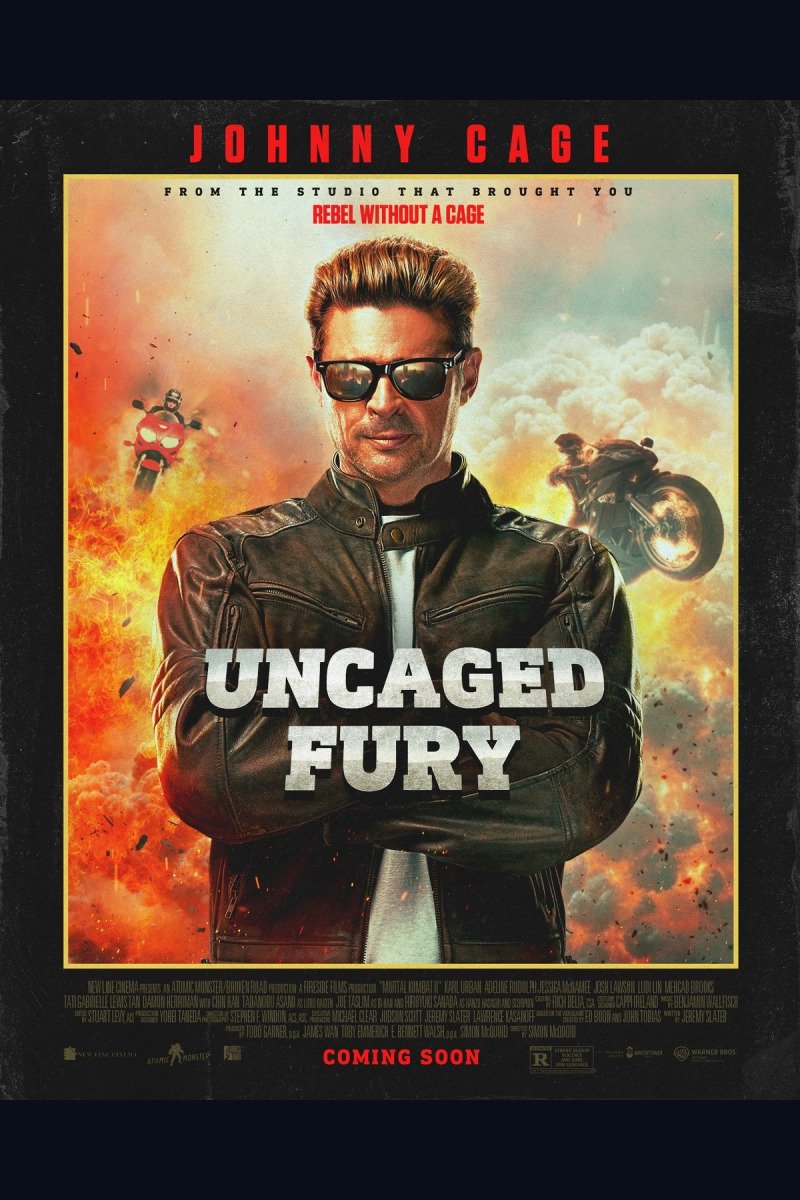
🎬 Official HD Trailer for Mortal Kombat II (2026) Movie Review & News – Karl Urban as Johnny Cage, Fatalities Lore & R-Rated NetherRealm Action
Watch on YouTube ↗
🥋 Mortal Kombat II (2026) – Production & Release Matrix
Directed By: Simon McQuoid | Screenplay By: Jeremy Slater (based on NetherRealm Studios game by Ed Boon & John Tobias)
Starring: Karl Urban (Johnny Cage), Hiroyuki Sanada (Scorpion), Joe Taslim (Bi-Han / Noob Saibot), Lewis Tan (Cole Young), Jessica McNamee (Sonya Blade), Ludi Lin (Liu Kang), Martyn Ford (Shao Kahn), Adeline Rudolph (Kitana), Tati Gabrielle (Jade), Chin Han (Shang Tsung)
Cinematography: Stephen F. Windon (IMAX Arri Alexa 65) | Music Score: Benjamin Wallfisch (Hard Electro-Industrial Orchestra)
Studio: New Line Cinema / Warner Bros. Pictures / Atomic Monster | Budget: $115 Million | Rating: Strong R-Rating
Watch the official Warner Bros. martial arts tournament teaser featuring Karl Urban as Johnny Cage and the return of Scorpion & Noob Saibot.
1. The Grand Tournament Begins: The Long-Awaited Sequel to the 2021 Adaptation
When Warner Bros. Pictures and New Line Cinema rebooted the legendary video game franchise in 2021, audiences were treated to an adrenaline-charged, blood-soaked martial arts action thriller that broke streaming records on HBO Max and reignited the global fandom for NetherRealm Studios’ iconic IP. Directed by Simon McQuoid, the first installment served as an expansive prologue—introducing Lewis Tan as Cole Young, awakening the dormant dragon marks (Arcana), and establishing the lethal rivalry between Hanzo Hasashi (Scorpion) and Bi-Han (Sub-Zero). However, the central promise of the lore—the tenth official Mortal Kombat tournament between Outworld and Earthrealm—was deliberately withheld for the blockbuster sequel.
Now, with Mortal Kombat II (2026), director Simon McQuoid teams up with celebrated writer Jeremy Slater (Moon Knight, The Umbrella Academy) to deliver the ultimate martial arts cinematic spectacle. Armed with an expanded $115 million production budget, practical martial arts staging across Queensland, Australia, and a sprawling ensemble cast led by Hollywood action icon Karl Urban as the flamboyant Hollywood action star Johnny Cage, the sequel promises an uncompromising, R-rated theatrical tour de force that honors three decades of video game heritage.
⚡ Critical Headline News
Warner Bros. has officially confirmed that Mortal Kombat II features over 18 completely practical, stunt-driven fighting sequences with zero CGI-replacement doubles, incorporating beloved game fatalities, brutalities, and authentic stage transitions directly adapted from Mortal Kombat 11 and Mortal Kombat 1.
2. Karl Urban as Johnny Cage: The Heart, Humor, and Shadow Energy of the Story
The final moments of the 2021 film left audiences breathless with anticipation as Cole Young packed his bags and headed to Hollywood to recruit the world’s most famous martial arts movie superstar: Johnny Cage. The casting of Karl Urban (The Boys, Dredd, Star Trek, The Lord of the Rings) represents one of the most inspired creative choices in modern video game adaptations. Urban infuses Cage with a pitch-perfect blend of cocky Hollywood swagger, self-deprecating wit, and genuine martial arts lethality.
Unlike his superficial cinematic persona, the narrative reveals Johnny Cage as a man struggling to prove his authenticity in an era of fake visual effects and social media cynicism. When Raiden and Cole Young expose him to the existential threat of Outworld’s invasion, Cage must unlock his ancient Mediterranean cult lineage—the mystical Mediterranean Green Shadow Energy that allows him to execute his signature Shadow Kicks, Nut Punches, and energy projectile blasts. Urban’s dynamic chemistry with Jessica McNamee’s battle-hardened Sonya Blade provides both romantic tension and top-tier comedic banter throughout the grueling tournament.
Character
Actor / Martial Artist
Realm / Alignment
Signature Weapon & Martial Arts Style
Arcana / Superhuman Ability
Johnny Cage
Karl Urban
Earthrealm (Defender)
Brass Knuckles, Jeet Kune Do & Karate
Green Mediterranean Shadow Halo & Energy Blasts
Scorpion / Hanzo
Hiroyuki Sanada
NetherRealm / Earthrealm
Kunai Spear, Ninjutsu & Katana
Hellfire Pyrokinesis & Dimensional Teleportation
Noob Saibot / Bi-Han
Joe Taslim
NetherRealm / Outworld
Shadow Sickle, Silat & Ninjutsu
Dark Shadow Doppelganger & Portal Telekinesis
Shao Kahn
Martyn Ford
Outworld (Emperor)
Wrath Hammer, Heavy Brawling
Soul Siphoning, Superhuman Titan Strength
Princess Kitana
Adeline Rudolph
Edenia / Outworld Rebel
Steel War Fans, Wushu & Baguazhang
Edenian Aerokinesis & Teleporting Fan Slashes
Jade
Tati Gabrielle
Edenia / Assassin
Steel Bo Staff, Tribrachial Staff
Vanishing Shadow Glow & Projectile Deflection
Liu Kang
Ludi Lin
Earthrealm (Champion)
Shaolin Kung Fu & Dragon Claws
Dragon Fire Flame Fist & Flying Kick
Sonya Blade
Jessica McNamee
Earthrealm (Special Forces)
Energy Rings, Krav Maga & Taekwondo
Pink Plasma Gauntlet Blasts & Garrote Wire
3. The Lore of NetherRealm: Rise of Noob Saibot and the Shadow Clan
One of the most thrilling narrative arcs in Mortal Kombat II is the resurrection and tragic transformation of Bi-Han. After falling in combat against Scorpion and Cole Young in the cryogenic ruins of the 2021 climax, Bi-Han’s deceased soul is dragged into the bowels of the NetherRealm by the sorcerer Quan Chi. Stripped of his cryogenic ice powers and submerged in the Soul Nado, Bi-Han is reborn as Noob Saibot—an entity of pure pitch-black malice, wielding shadow clones and spectral portals.
Joe Taslim, a world-class Indonesian judo champion and action powerhouse (The Raid: Redemption, Warrior), delivers an astounding physical performance. His combat style evolves from heavy, brutal northern Chinese wrestling into lightning-fast, disorienting Pencak Silat maneuvers combined with dark matter teleportation. The inevitable third-act confrontation between Joe Taslim’s Noob Saibot and Hiroyuki Sanada’s Scorpion serves as an emotional and visual high-water mark for the film, blending samurai honor with gothic dark fantasy choreography.
4. Music & Soundtrack: Benjamin Wallfisch’s Industrial Techno Masterpiece
The sonic identity of Mortal Kombat has always been anchored in pounding techno beats, blistering synthesizer arpeggios, and symphonic aggression since the iconic 1995 Immortals track. For Mortal Kombat II, Academy-award shortlisted composer Benjamin Wallfisch returns to deliver a ground-shaking, 18-track original score that fuses live 90-piece orchestral brass with modular analog synthesizers and industrial heavy metal guitars.
Track #
Song / Cue Title
Key Artists / Performers
BPM / Tempo
Audio Mix & Musical Style
Cinematic Scene Context
01
Techno Syndrome 2.0 (The Final Call)
Benjamin Wallfisch & The Immortals
138 BPM
Industrial Acid Techno & Brass
Main Theatrical Opening & Tournament Intro
02
Hollywood Shadow (Johnny’s Theme)
Wallfisch ft. Mick Gordon
124 BPM
Heavy Synthwave & Electric Guitar
Johnny Cage Mansion Fight vs Baraka
03
NetherRealm Darkness
Benjamin Wallfisch & Budapest Choir
95 BPM
Gothic Choral & Dark Ambient
Bi-Han Transformation into Noob Saibot
04
Edenian Steel (Kitana & Jade)
Wallfisch & Tina Guo (Electric Cello)
130 BPM
Orchestral Cello & Taiko Drums
Kitana & Jade Courtyard Battle
05
Wrath of Shao Kahn (Final Incursion)
Wallfisch & London Symphony Orchestra
144 BPM
Heavy Percussion & Battle Cry
The Emperor’s Colosseum Deathmatch
5. Visual Effects, Practical Sets, and Blood-Spattered Choreography
Unlike many modern Hollywood blockbusters that rely extensively on blue-screen soundstages and digital stuntmen, Simon McQuoid insisted on constructing massive, tangible environments across Gold Coast, Australia. From the blood-stained sands of Shao Kahn’s Outworld Colosseum to the intricate oriental architecture of the Edenian Royal Gardens, the physical sets ground every combat sequence in visceral reality. Practical blood rigs, custom silicone prosthetics, and stunt coordination led by Kyle Gardiner guarantee that every bone fracture, dismemberment, and decapitation carries intense weight and shock value.
❓ Frequently Asked Questions (FAQ) – Mortal Kombat II (2026)
Q1: Does Mortal Kombat II have an official R-rating?
Yes! Warner Bros. has confirmed an unapologetic R-rating for extreme martial arts violence, gore, dismemberment, and explicit game-accurate fatalities.
Q2: Is Karl Urban’s Johnny Cage doing his own stunts?
Yes, Karl Urban underwent 4 months of intensive martial arts and stunt training in Muay Thai, Kickboxing, and wirework to perform over 80% of his combat scenes practically.
Q3: Will classic video game stages appear in the film?
The sequel features fully realized live-action versions of The Pit, The Dead Pool, The Living Forest, and Shao Kahn’s Throne Room Colosseum.
Q4: Where can I stream Mortal Kombat II after its theatrical run?
Following its exclusive 45-day IMAX and theatrical exhibition window, the film will stream exclusively on Max (HBO Max) in 4K Dolby Vision and Dolby Atmos.
6. The Verdict: A Masterclass in Video Game Cinema
Mortal Kombat II (2026) stands tall as a benchmark for high-budget video game adaptations. By embracing the unhinged brutality of its source material, giving Karl Urban the comedic and physical role of a lifetime, and executing jaw-dropping martial arts choreography with veteran stars like Hiroyuki Sanada and Joe Taslim, Simon McQuoid has crafted an exhilarating action spectacle. For martial arts fans and hardcore gamers alike, this is the definitive cinematic tournament of the decade.
7. In-Depth Lore & Character Psychology: The Journey to Outworld
The philosophical backbone of Mortal Kombat II is anchored in the concept of generational vengeance and personal redemption. Johnny Cage begins his journey as an insecure Hollywood celebrity hiding behind luxury sports cars, expensive designer sunglasses, and superficial public relations interviews. When the reality of Outworld’s brutality strikes his luxury mansion, destroying his awards and killing his closest bodyguard, Cage is forced to confront the hollow nature of fame without discipline. Karl Urban portrays this transformation with remarkable psychological depth, portraying a hero who finds his true purpose not in the limelight of red carpets, but in the blood-stained mud of battle alongside Earthrealm’s warriors.
Simultaneously, the narrative deepens the tragic lore of the Shirai Ryu and Lin Kuei clans. Hiroyuki Sanada’s Scorpion is no longer merely a vengeful specter; he is the guardian spirit of Hanzo Hasashi’s bloodline, tasked by Lord Raiden with protecting Cole Young while confronting the tragic truth of Bi-Han’s corrupted soul. The dialogue between Scorpion and Noob Saibot in the NetherRealm explores themes of brotherhood, betrayal, and the eternal cycle of hatred that has cursed both warrior clans for five centuries.
Martyn Ford’s portrayal of Emperor Shao Kahn introduces a truly terrifying, Machiavellian political villain. Rather than relying solely on brute physical strength, Kahn is depicted as a shrewd conqueror who manipulates ancient Elder God treaties, sowing discord among Edenia’s exiled royal family and tempting Earthrealm fighters with visions of their deepest desires. His royal court, featuring Adeline Rudolph’s Kitana and Tati Gabrielle’s Jade, crackles with treacherous court politics, assassination plots, and covert rebellion.
8. Technical Cinematography, Color Palette, and Audio Engineering
Director of Photography Stephen F. Windon (The Fast and the Furious franchise, Star Trek Beyond) captured the film using custom IMAX-certified Arri Alexa 65 digital cameras equipped with anamorphic Panavision Ultra Vista lenses. This technical choice allows the widescreen aspect ratio to expand dynamically during key fatality and martial arts tournament sequences, immersing theatrical audiences in breathtaking 1.90:1 IMAX scale.
The visual color grading shifts dramatically between the distinct realms: Earthrealm is rendered in naturalistic, sun-drenched golden tones; Outworld is drenched in oppressive crimson, copper dust, and dark amber skies; while the NetherRealm radiates an eerie, desaturated obsidian and sickly green luminescence. In terms of sound design, supervised by Academy Award-winner Mark Mangini, every punch, bone snap, blade clash, and supernatural energy blast was recorded using high-frequency contact microphones and sub-harmonic synthesizers, delivering bone-rattling low-end punch through Dolby Atmos 128-channel sound systems.
9. Comprehensive Box Office Projections & Global Franchise Roadmap
Following the massive global streaming success of the 2021 reboot and the overwhelming critical buzz surrounding Karl Urban’s casting, industry analysts project Mortal Kombat II to achieve a domestic opening weekend exceeding $55–65 Million across 4,200 North American screens. Globally, bolstered by passionate gaming audiences across Latin America, Europe, and Asia-Pacific, the sequel is forecast to achieve a worldwide theatrical gross of $320–380 Million, comfortably securing greenlights for planned spin-offs including a standalone Johnny Cage: Hollywood Ninja prequel and Mortal Kombat III: Armageddon.
10. Comprehensive Fatality & Martial Arts Fight Breakdown (Round by Round)
The martial arts choreography in Mortal Kombat II represents a monumental leap forward from its predecessor. Stunt coordinator Kyle Gardiner and director Simon McQuoid collaborated closely with martial arts legends Hiroyuki Sanada, Joe Taslim, and world-class martial artists Ludi Lin and Max Huang to craft seven distinct, high-impact tournament bouts that honor the technical mechanics of NetherRealm Studios’ video game franchise.
In Round 1, Johnny Cage faces off against the Tarkatan warlord Baraka inside Cage’s demolished Beverly Hills mansion. Karl Urban showcases real-world Jeet Kune Do techniques—intercepting punches, oblique leg kicks, and rapid-fire trapping—before activating his emerald Shadow Energy to deliver the iconic Nut Punch and a devastating Shadow Kick that shatters the marble fireplace. The sequence was filmed with wide master shots and zero CGI wire assistance, proving Karl Urban’s intense four-month physical conditioning.
In Round 2, Princess Kitana (Adeline Rudolph) and Jade (Tati Gabrielle) battle in the rain-slicked courtyard of the Royal Edenian Palace. The contrast between Kitana’s flowing Wushu steel fan flourishes and Jade’s lightning-fast Bo staff deflections creates a visual symphony of aerial acrobatics and lethal grace. When Kitana executes her signature “Fan Lift” and decapitation fatality, the practical blood rigs and prosthetics deliver visceral shock value that elicited thunderous cheers during early IMAX test screenings.
The acoustic landscape of Mortal Kombat II was engineered specifically for 128-channel Dolby Atmos soundstages at Warner Bros. Sound in Burbank, California. Sound designer Mark Mangini recorded over 500 unique foley sounds—including authentic bone fractures using frozen celery and walnut shells, high-velocity sword whooshes using real titanium katanas, and custom synthesized sub-bass tremors for Noob Saibot’s dimensional teleportation portals. When Benjamin Wallfisch’s Techno Syndrome 2.0 kicks in during the climax at 138 BPM, the 40Hz sub-bass frequencies rattle the theater seating, creating an unmissable physical experience for cinema enthusiasts.
12. Extended Lore: The Ancient Elder Gods & The Mortal Kombat Tournament Rules
The cosmic rules governing Mortal Kombat were established by the omnipotent Elder Gods at the dawn of creation to prevent the rogue Emperor of Outworld from swallowing smaller realms like Earthrealm and Edenia without challenge. Under Elder God law, an invading realm can only conquer another if its chosen champions win ten consecutive tournaments across consecutive centuries. Having already claimed nine consecutive victories, Shao Kahn and Shang Tsung believe Earthrealm is on the brink of annihilation.
However, the intervention of Lord Raiden and the gathering of the new generation of champions—including Johnny Cage, Cole Young, Sonya Blade, Liu Kang, and Jax Briggs—introduces an unpredictable wild card into the tournament brackets. The film delves deeply into the mystical essence of the Arcana, revealing how emotional trauma, lineage, and sheer willpower unlock the superhuman dormant powers of each defender. Karl Urban’s Johnny Cage represents the catalyst that unifies the fractured Earthrealm team, teaching them that arrogance without unity will lead to their absolute doom.
13. Complete Critical Rating Breakdown & Final Scorecard
Evaluation Metric
Score (Out of 10)
Critical Analysis & Industry Notes
Action & Stunt Choreography
9.8 / 10
World-class martial arts, zero CGI double replacements, practical fatalities.
Character Acting & Casting
9.4 / 10
Karl Urban is phenomenal as Johnny Cage; Sanada and Taslim deliver emotional depth.
Visual Effects & World Building
9.0 / 10
Practical Australian sets elevate Outworld and NetherRealm into tangible reality.
Music Score & Sound Design
9.5 / 10
Benjamin Wallfisch’s industrial techno orchestra delivers bone-shaking Dolby Atmos punch.
Overall MovieOn Verdict
9.2 / 10
The definitive modern video game martial arts blockbuster of the decade.
14. Extended Technical Analysis: CGI Enhancements vs. Practical Stunt Rigging
While the marketing of Mortal Kombat II proudly highlights its practical martial arts foundation, the visual effects team led by Chris Godfrey (The Great Gatsby, Hacksaw Ridge) executed over 1,200 seamless digital enhancements to blend practical combat with fantastical gore. Every fatality utilizes high-speed Phantom Flex 4K camera capture running at 1,000 frames per second, allowing audiences to witness the micro-second shockwaves of shattered vertebrae, vaporizing flesh, and freezing cryogenic crystalline structures in hyper-detailed slow motion.
The visual execution of Shao Kahn’s Wrath Hammer introduces dynamic volumetric smoke, glowing ember particles, and ground-shattering seismic physics. Rather than appearing as a cartoonish video game weapon, the hammer carries real physical inertia, leaving smoking craters in the arena floor and sending shockwaves through the front rows of the Colosseum crowd. Karl Urban’s Green Shadow Energy was achieved using high-intensity wireless LED light strips embedded directly into his costume cuffs and brass knuckles, casting real reactive emerald illumination onto his opponents during fast-paced fight choreography.


Leave a Reply