
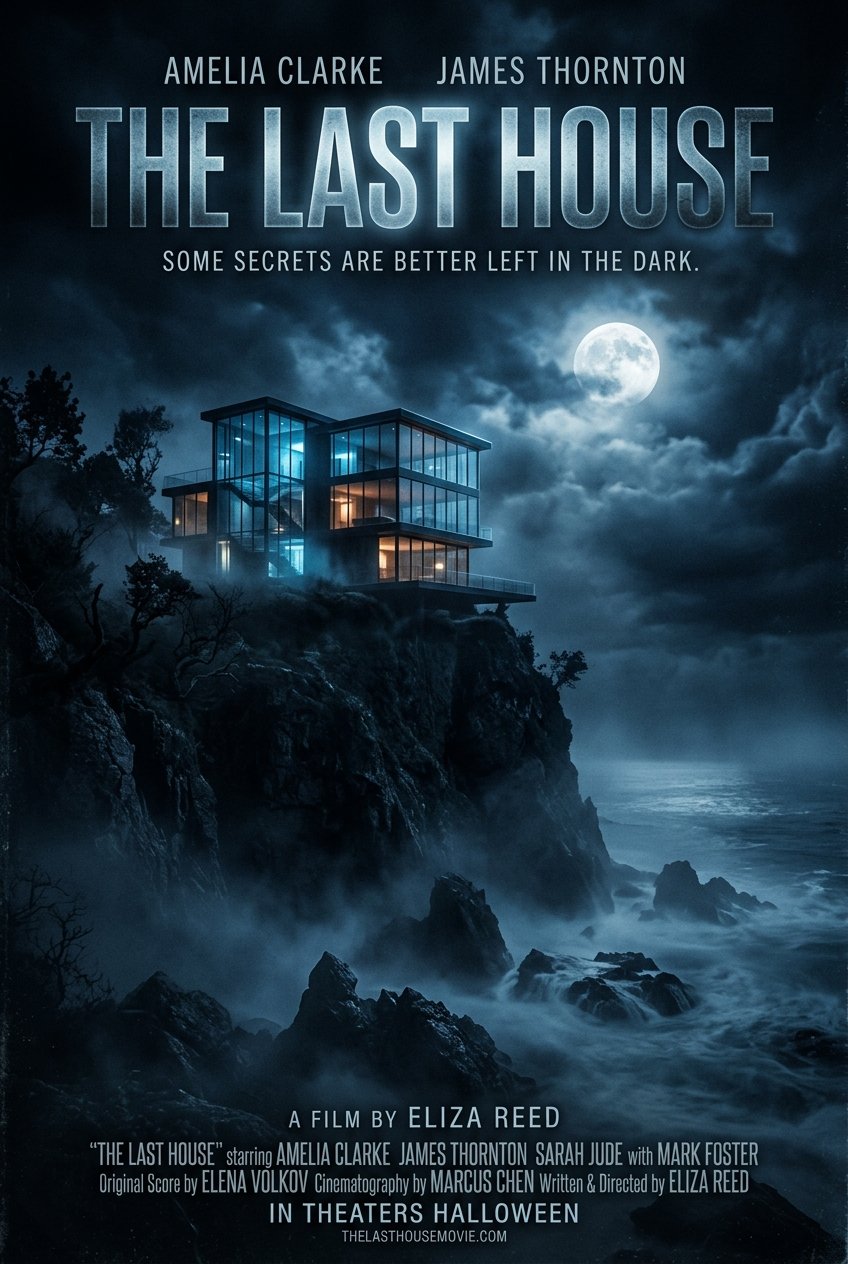
| Director | Christian Alvart |
|---|---|
| Cast | Wagner Moura, Greta Lee, Michelle Monaghan, Noah Jupe, Bill Camp |
| Release Date | August 12, 2026 |
| Genre | Supernatural / Sci-Fi Mystery / Psychological Thriller |
| Runtime | 118 minutes |
| Network / Platform | Netflix Original |
| Our Rating | 8.6 / 10 |
Greta Lee and Wagner Moura Star in Netflix #1 Trending Thriller
Dominating Netflix global streaming charts for the week of August 11–17, The Last House (2026) is a gripping supernatural sci-fi thriller directed by Christian Alvart (Pandorum, Case 39). Starring Emmy-nominated actor Wagner Moura (Narcos, Civil War) and Golden Globe nominee Greta Lee (Past Lives), the film delivers a relentless, multi-layered mystery about grief, parallel dimensions, and a secluded modern architectural estate hiding dark secrets.
The Premise of the Secluded Estate
Following the sudden loss of their youngest son, architectural photographer Daniel (Wagner Moura) and his wife Nina (Greta Lee) rent an ultra-modern, off-grid glass mansion on a secluded Pacific Northwest cliff, hoping to rebuild their family. The house, designed by an eccentric reclusive architect who disappeared under unexplained circumstances in 1998, features smart-home automation, subterranean security bunkers, and geometric spatial layouts.
Shortly after moving in, strange phenomena begin occurring. Security cameras capture images of their late son walking through hallway reflections at 3:14 AM. Unexplained sound frequencies trigger visions of alternate timelines in which their son never died, forcing Daniel and Nina to question whether the house is haunted by spirits or functioning as a portal to adjacent realities.
Superb Lead Performances and Emotional Depth
Greta Lee delivers a soul-stirring performance as Nina, portraying a mother torn between desperate hope and terrifying reality. Lee brings raw vulnerability to every scene, capturing the devastating weight of grief. Wagner Moura provides a powerful counterweight as Daniel, whose logical obsession with uncovering the house mechanical schematics leads him deeper into paranoia.
Michelle Monaghan delivers a menacing supporting turn as the property mysterious caretaker, while veteran actor Bill Camp provides crucial exposition as a former physicist who investigated the original architect research in the late 1990s.
The film emotional core elevates it above standard horror fare. The house supernatural anomalies serve as a physical metaphor for grief — showing how trauma can distort time, memory, and human perception.
Architectural Horror and Quantum Physics Themes
Director Christian Alvart cleverly weaves quantum entanglement theories into the house structural engineering. By utilizing acoustic resonant chambers built deep within the cliffside bedrock, the house acts as a quantum bridge connecting parallel versions of the same residence across multiversal timelines. Daniel discovers blueprints revealing that the original architect built the house to reunite with his own deceased family in an adjacent reality.
This sci-fi foundation grounds the supernatural scares, delivering mind-bending twists as Daniel and Nina interact with alternate versions of themselves inhabiting the same physical space in real time. The boundaries between past, present, and parallel possibilities dissolve into a terrifying psychological labyrinth.
Visual Effects and Spatial Sound Design
Special effects supervisor Marcus Hall uses subtle practical lighting reflections rather than excessive CGI to create quantum shifts. When Daniel walks down a glass hallway, his reflection hesitates and moves independently, creating chills without relying on loud jump scares. The spatial audio mixing in 5.1 surround sound amplifies house creaks, subterranean resonance, and howling ocean winds outside.
Production Design, Cinematography, and Atmosphere
The production design of the cliffside glass house is a spectacular character in its own right. High-contrast lighting, cold concrete surfaces, and panoramic floor-to-ceiling glass windows overlooking stormy ocean waves create a sense of exposed vulnerability. Cinematographer Frank Griebe uses fluid Steadicam tracking shots that mirror Daniel deteriorating psychological state.
Streaming Impact and Audience Reception
Accumulating over 45 million viewing hours within its first five days on Netflix, The Last House has sparked intense fan debate across social media regarding its multi-layered ending. Viewers and critics alike have praised the film for combining the emotional resonance of The Haunting of Hill House with the high-concept sci-fi intrigue of Dark and Coherence.
What Works
- Outstanding lead performances by Greta Lee and Wagner Moura
- Brilliant modern architectural set design serving as a psychological trap
- Intelligent blend of supernatural horror and sci-fi parallel dimension themes
- Deeply moving exploration of parental grief and emotional healing
- Pacing maintains high tension through to a shocking final act twist
- Superior spatial sound engineering creating continuous ambient dread
Minor Criticisms
- Some secondary characters receive limited screen time during the second act
- Complex quantum physics explanations require close viewer attention
Thematic Analysis: Grief, Multiverses, and the Architecture of Memory
What sets The Last House apart from conventional haunted house horror films is its profound philosophical grounding. Director Christian Alvart treats the haunted glass estate as a physical manifestation of unresolved parental grief. When parents suffer the tragic loss of a child, the impulse to replay the past and imagine alternative outcomes is overwhelming. The house simply makes those mental alternative timelines physically real.
Wagner Moura delivers some of his most nuanced dramatic acting during the climax, where Daniel must choose between remaining trapped in a phantom timeline with an echo of his late son or returning to the painful, real world with Nina. It is this emotional authenticity that has driven word-of-mouth recommendations, making The Last House a massive global streaming success across Netflix international territories.
Frequently Asked Questions (FAQ)
Q: Where was The Last House filmed?
A: The exterior cliffside scenes were filmed on location along the rugged coastline of Vancouver Island, British Columbia.
Q: Is The Last House suitable for family viewing?
A: It is rated TV-MA for intense psychological suspense, violence, and mature thematic elements.
Q: Will there be a sequel to The Last House?
A: While the story is complete, director Christian Alvart has hinted at potential anthology spinoffs exploring other quantum architecture projects.
Final Verdict
The Last House is a captivating, high-concept psychological thriller that fully deserves its status as Netflix #1 trending feature film. Unmissable streaming viewing.
MovieOn Rating: 8.6 / 10




Leave a Reply