
Introduction: The Most Demanding Film of the Decade
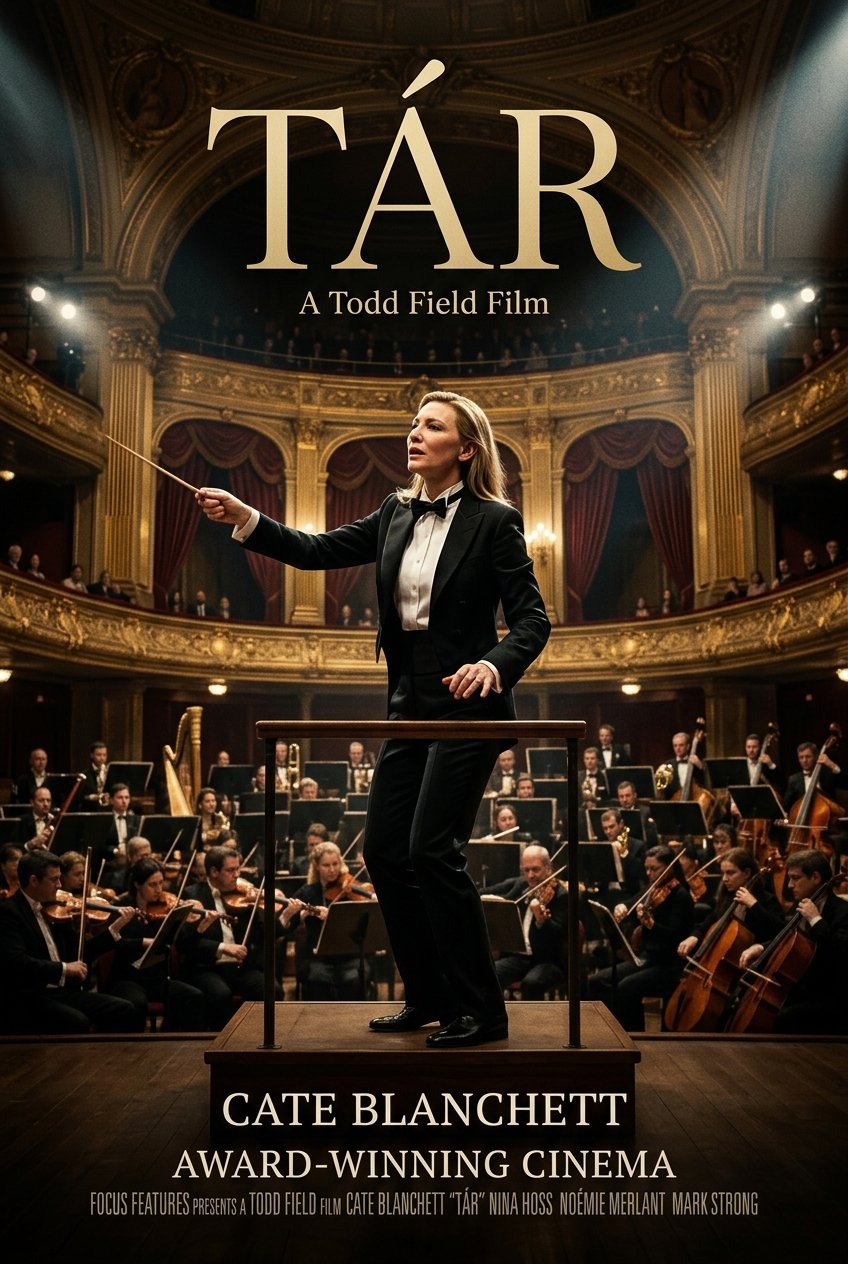
Tár is the most intellectually challenging and morally complex film of recent years — a portrait of a genius in the process of self-destruction that absolutely refuses the catharsis of easy judgment. Todd Field’s film about Lydia Tár, one of the world’s foremost conductors facing allegations of abuse of power, demands that its audience sit with discomfort, ambiguity, and the competing loyalties between admiring great art and acknowledging the behavior of the people who make it. It is the kind of film that cinema needs more of: genuinely adult, genuinely difficult, genuinely unresolved.
Cate Blanchett: Beyond Category
Cate Blanchett’s performance as Lydia Tár won every major critics’ award of the season and the Academy Award for Best Actress, and these recognitions barely capture what she achieves. She plays a conductor so completely — the specific physicality of baton technique, the ear for music that informs every conversation, the intellectual authority that has calcified into something resembling contempt for lesser minds — that early viewers assumed they were watching a documentary about a real person. The internet spent days after the trailer’s release trying to confirm that Lydia Tár was real.
📖 Also Read
-
▶ The Zone of Interest (2023) Review – A Holocaust Film Unlike Any Other
-
▶ Poor Things (2023) Review – Emma Stone Shines in Lanthimos's Surreal Feminist Masterpiece
-
▶ Killers of the Flower Moon (2023) Review – Scorsese's Devastating American Epic
-
▶ The Godfather (1972) Review – Francis Ford Coppola's Timeless Crime Epic
The first scene — an extended New Yorker interview conducted before a live audience, in which Tár displays her wit, erudition, and barely contained disdain with simultaneous charm — is one of cinema’s great opening sequences. It establishes character in real time through pure performance, without the usual shorthand of film storytelling. Blanchett makes every choice with total commitment: the specific way Tár holds a coffee cup, the quality of her attention when someone speaks, the momentary flickers of genuine vulnerability behind the armored public persona.
Todd Field’s Direction: The Grammar of Decline
Todd Field — who made his debut with In the Bedroom in 2001 and then spent two decades away from feature filmmaking — returns with a mastery of cinematic grammar that feels both classical and completely contemporary. He directs Tár with extraordinary patience, trusting long takes and silence in ways that most contemporary directors would find uncomfortable. The film builds its portrait of Lydia’s world and Lydia’s decline through accumulation rather than incident, and the result is a film that feels genuinely psychological — we understand Lydia’s interior life with unusual completeness by the time events overtake her.
The Art-Artist Question
Tár engages seriously with what has become the central cultural question of the post-#MeToo era: Can we separate the art from the artist? And more specifically: How should allegations of abuse of power affect our relationship to the work of an abuser? The film is admirably unwilling to answer this question on behalf of the audience. Lydia’s music is presented as genuinely extraordinary. Her behavior is presented as genuinely harmful. The film holds both truths simultaneously and asks us to decide what to do with the tension.
Our Rating: ⭐ 9.0 / 10
Verdict: One of the finest films of the decade. Demanding, uncompromising, and rewarding in proportion to the attention you bring to it. Cate Blanchett’s performance is a once-in-a-generation achievement. Essential adult cinema.
Production Excellence and Technical Achievement
Tár stands as a remarkable achievement in contemporary filmmaking — a film that succeeds not just as entertainment but as a genuine work of cinematic craft. The production team brought together exceptional talent across every department: the cinematography captures each scene with visual intelligence, the production design creates environments that feel authentic and purposeful, and the editing maintains precisely the rhythm the story requires.
The sound design and musical score deserve particular recognition. These sonic elements work in concert with the visual storytelling to create an immersive experience that engages the audience on multiple sensory levels simultaneously. The score, in particular, elevates key sequences beyond what the visuals alone could achieve — creating emotional resonance that persists beyond the specific moments it accompanies.
Themes and Cultural Resonance
What makes Tár genuinely important rather than merely entertaining is its engagement with themes that extend beyond its immediate narrative. The film asks questions that resonate with contemporary experience: about identity and transformation, about the costs of ambition and the meaning of success, about the relationships between individuals and the communities and institutions that shape them. These themes are not imposed upon the story but emerge naturally from it, which is the mark of genuinely accomplished screenwriting.
The performances throughout are of exceptional quality. The central performance anchors the film with authenticity and emotional intelligence, making the character’s journey feel personally true rather than narratively convenient. The supporting cast creates a fully realized world around that central performance, ensuring that every scene has the texture of genuine human interaction rather than plot mechanics.
Legacy and Recommendation
Tár earns its place among the finest films of its year and its genre. It is the kind of film that reminds audiences why cinema matters — why this particular form of storytelling, with its unique combination of image, sound, performance, and time, can achieve things that no other medium can. It rewards attentive viewing and repays revisitation, revealing new dimensions of craft and meaning with each viewing.
Recommended For: Viewers who appreciate quality filmmaking and emotional authenticity. Best Experienced: With full attention, in the best viewing environment available. This is a film that rewards the investment of genuine engagement.



Leave a Reply